Voxel Raytracing Engine + Pinball Game
In this challenging graphics and physics programming module, I developed a voxel-based raytracing engine in C++ - and as a creative extension, I turned it into a playable Pinball game!
Key Features I Built:
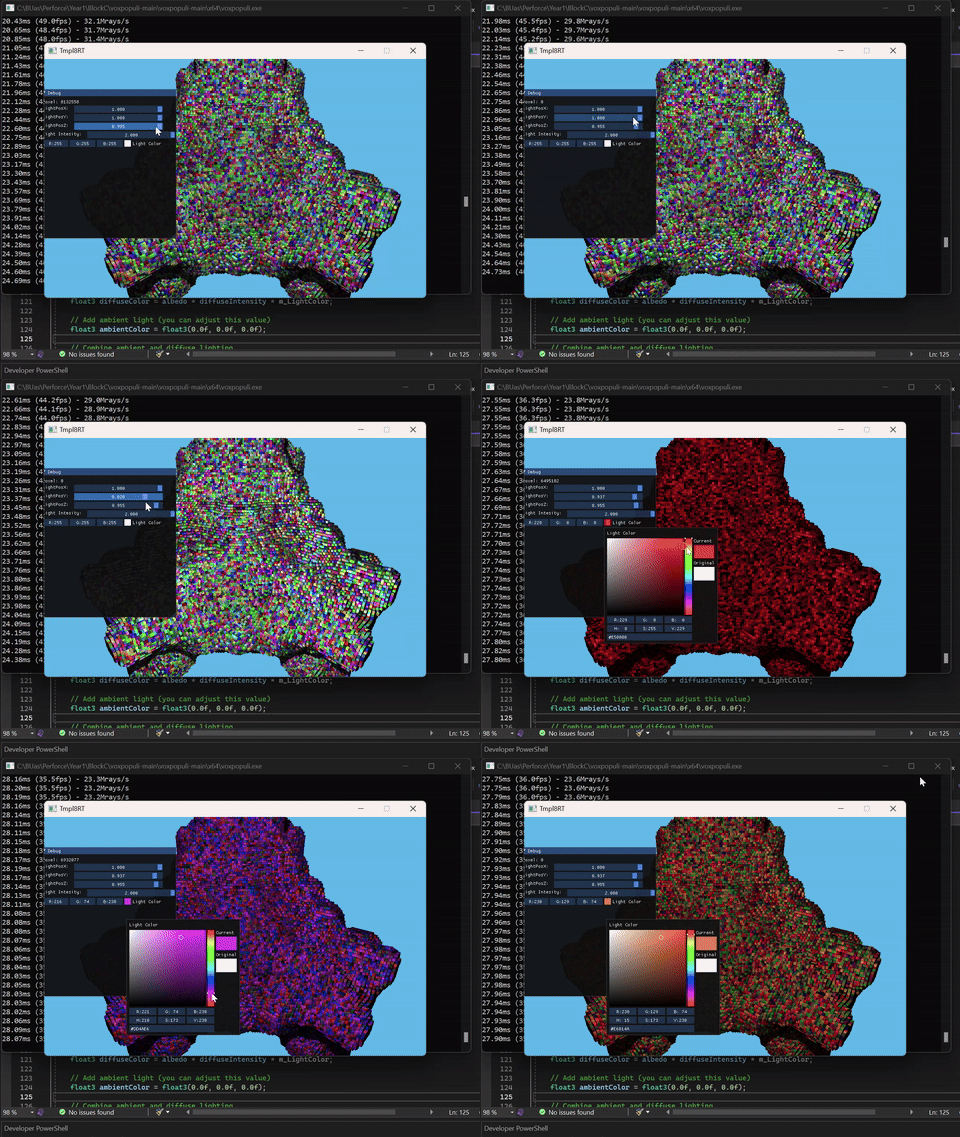
Advanced Lighting & Shadows
- Added point lights, spotlights, and directional lights, all casting shadows using shadow rays.
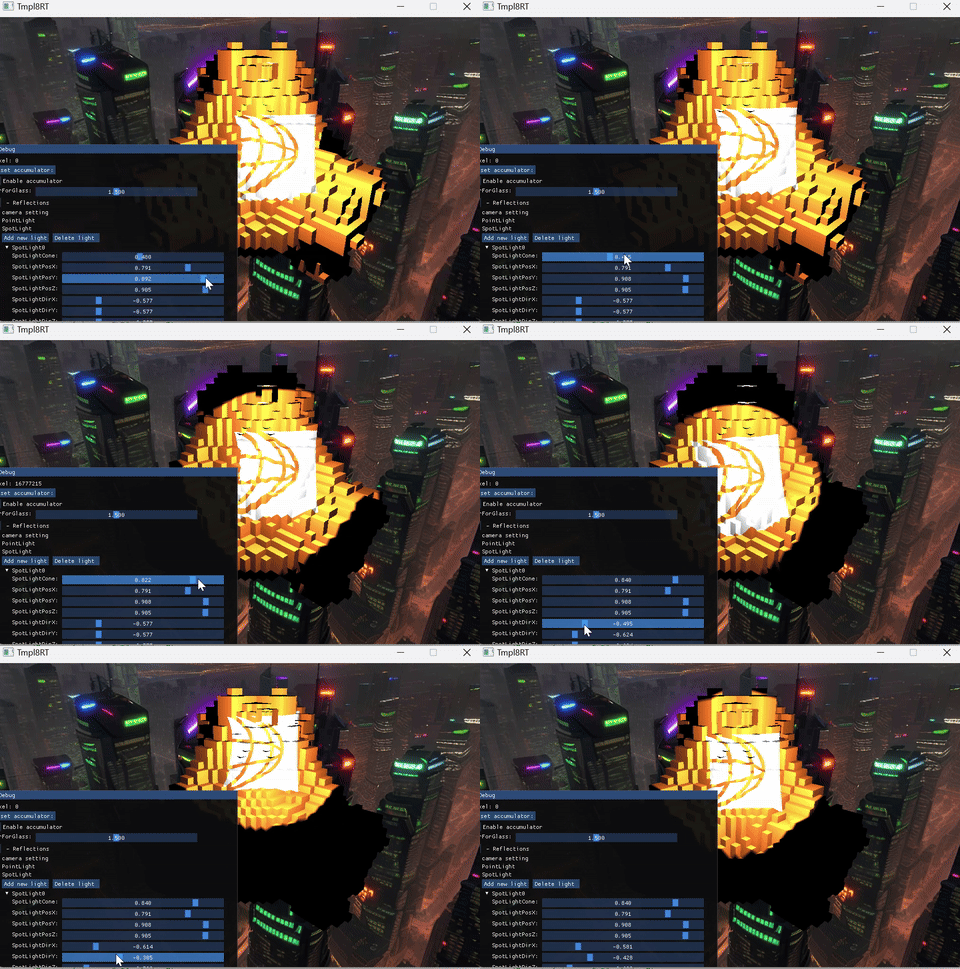
- Implemented picture spotlight.
Material System
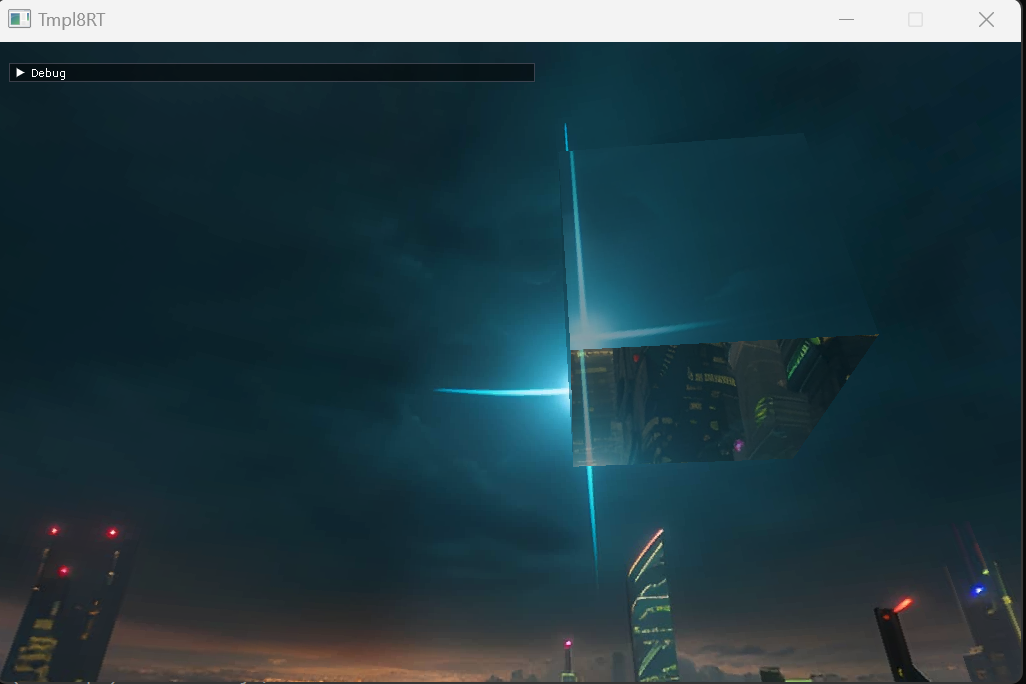
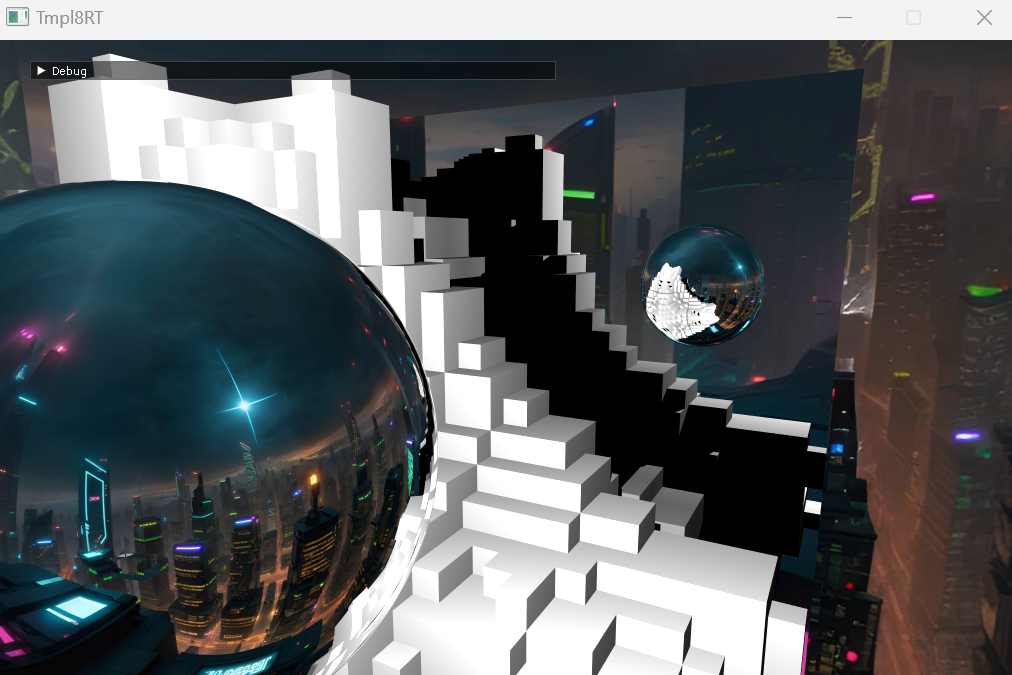
- Developed a material framework: reflective surfaces, recursive reflections (with recursion caps), and physically accurate dielectric (glass-like) materials.
Anti-Aliasing & Camera Improvements
- Replaced the simple pinhole camera with a camera supporting an aperture, significantly improving image quality through basic anti-aliasing.
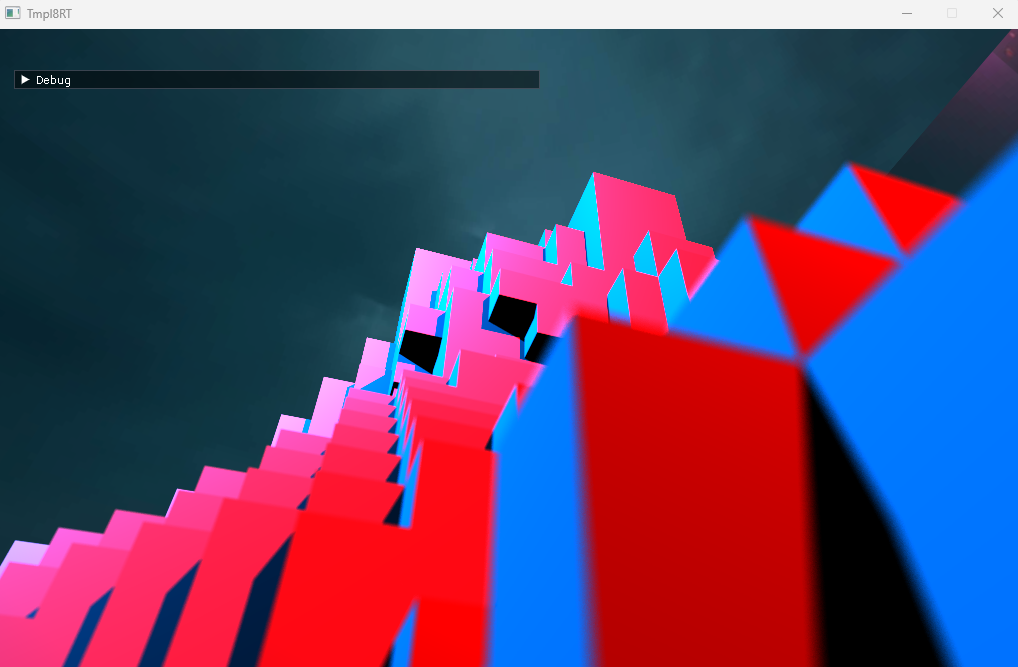
New Primitives & Scene Elements
- Added sphere primitives.
- Added a skydome for a satisfying environmental backdrop.
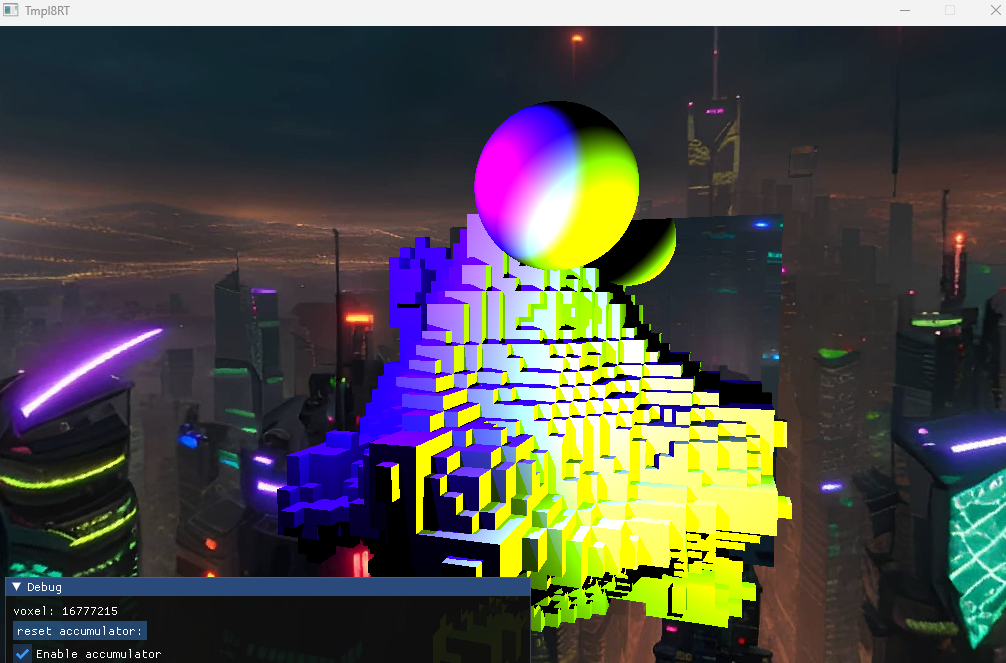
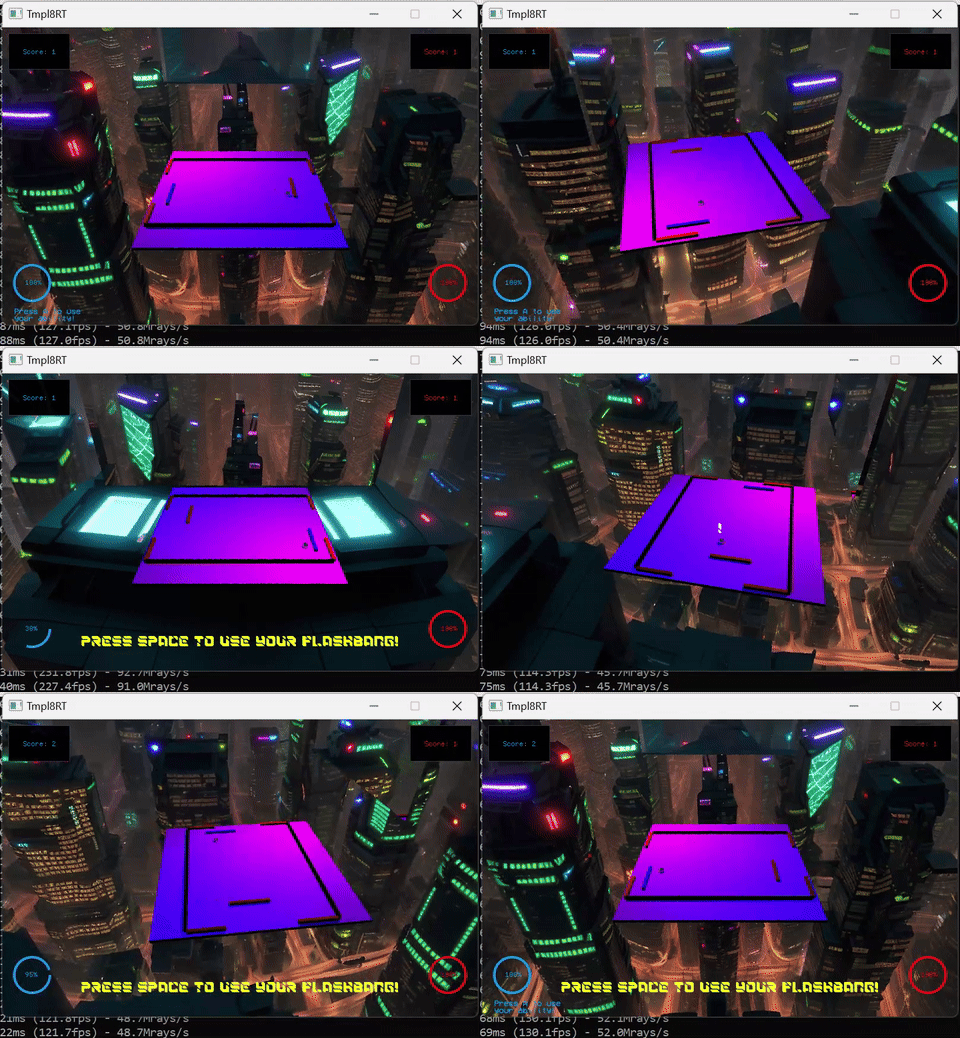
Creative Expansion: Pinball Game
- Leveraged the raytracing engine to develop a fun pinball game where players can play pinballs in voxel environment, blending graphics programming with gameplay mechanics.
Performance Profiling & Optimization
- Profiled the raytracer to identify bottlenecks and applied targeted optimizations for faster rendering.
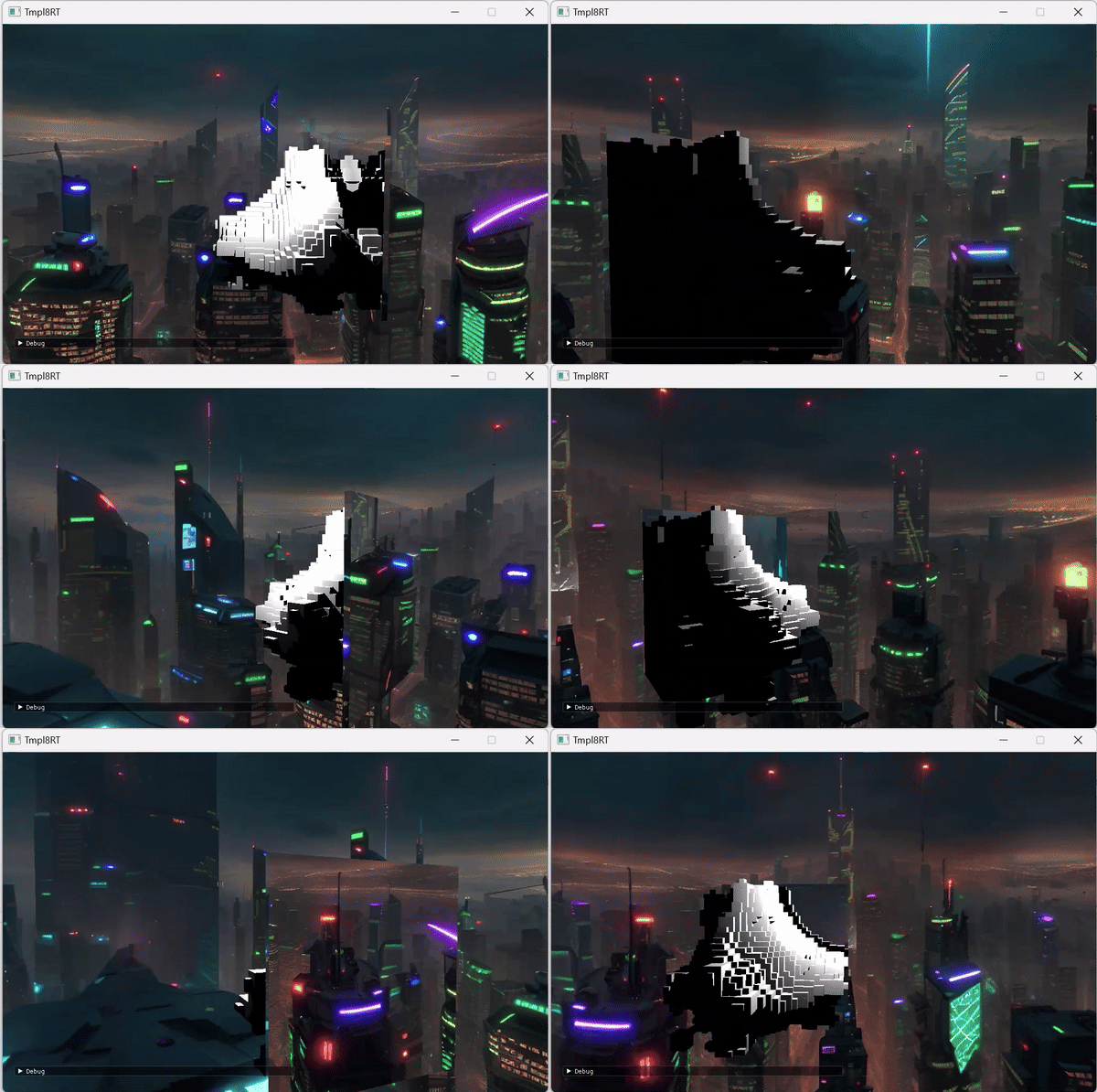
More pictures:
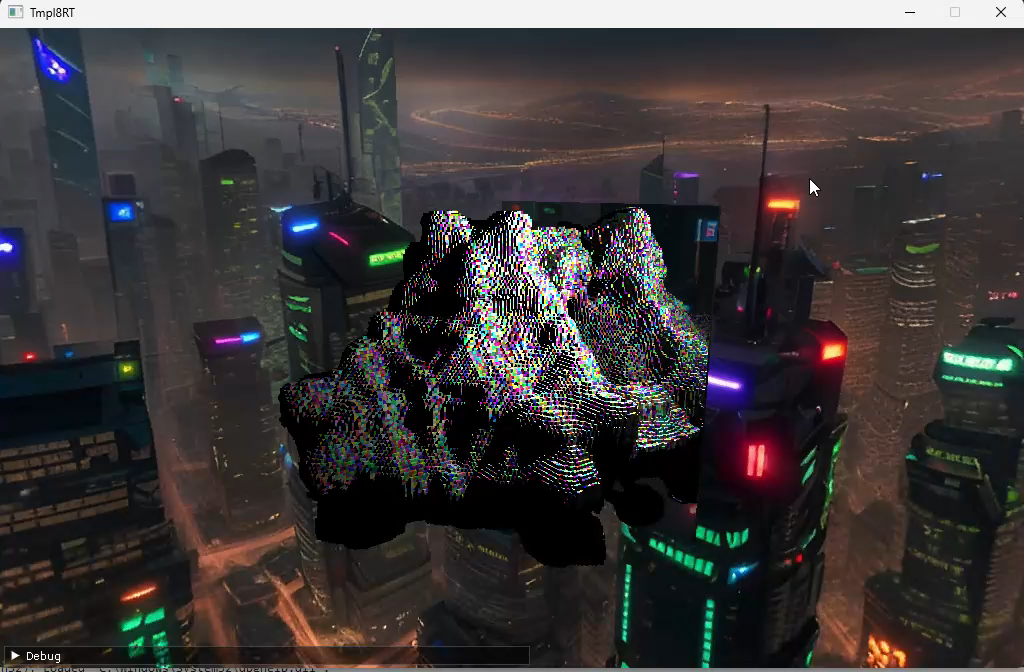
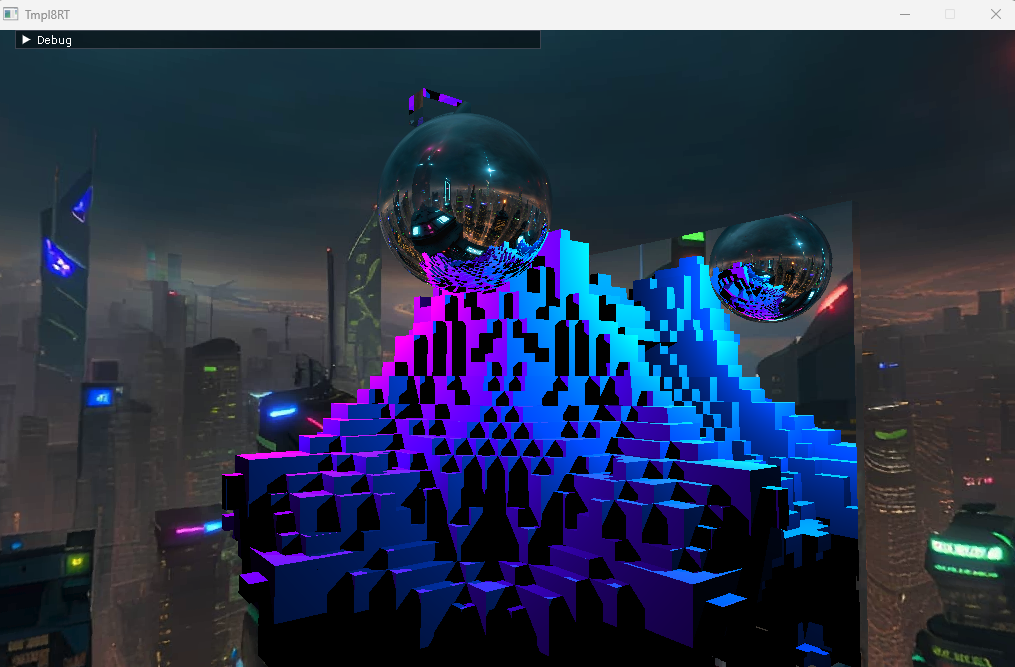
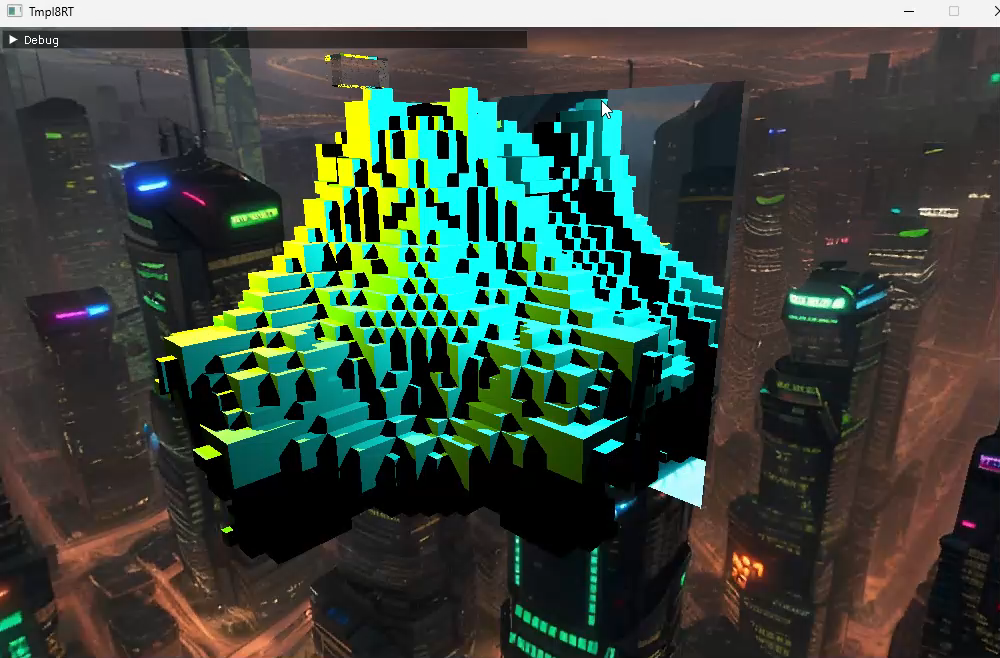
💡 What I Learned
This project deeply strengthened my understanding of:
- Recursive algorithms (especially in reflections)
- Light transport and shadow calculation
- Materials and surface interaction models
- Performance profiling and optimization strategies
- Combining visual engines with interactive physics and gameplay systems
It was a demanding but incredibly rewarding project where I bridged graphics theory with hands-on game creation :)